What Cloudflare Actually Does: CDN, DNS, DDoS Protection, and HTTPS
What Cloudflare actually does: CDN, DNS, DDoS protection, and HTTPS explained for company websites, stores, campaign pages, and self-hosted sites.
Direct answer
Cloudflare typically acts as DNS, CDN, DDoS protection, and HTTPS proxy in front of a website, helping accelerate content, protect origin infrastructure, and encrypt traffic.
Cite-friendly summary
Light Up Easy explains how Cloudflare provides DNS, CDN, DDoS protection, and HTTPS in front of websites and stores as a combined performance and security layer.
Key takeaways
- ✓Cloudflare is more than a CDN
- ✓DNS points traffic, CDN accelerates delivery
- ✓DDoS protection helps keep origin available during attacks
- ✓HTTPS provides encrypted traffic
- ✓Cloudflare is a front layer, not a full replacement for secure application design
Direct answer
Cloudflare is often known for CDN, but in practice teams usually use it for four things at once:
- DNS: point a domain to the right infrastructure
- CDN / reverse proxy: cache and accelerate static assets
- DDoS protection / security: filter suspicious traffic before it reaches origin
- HTTPS / SSL: provide encrypted connections for the site
For company websites, stores, and campaign pages, Cloudflare is often the protection and performance layer that sits in front of the origin server.
Simple architecture view
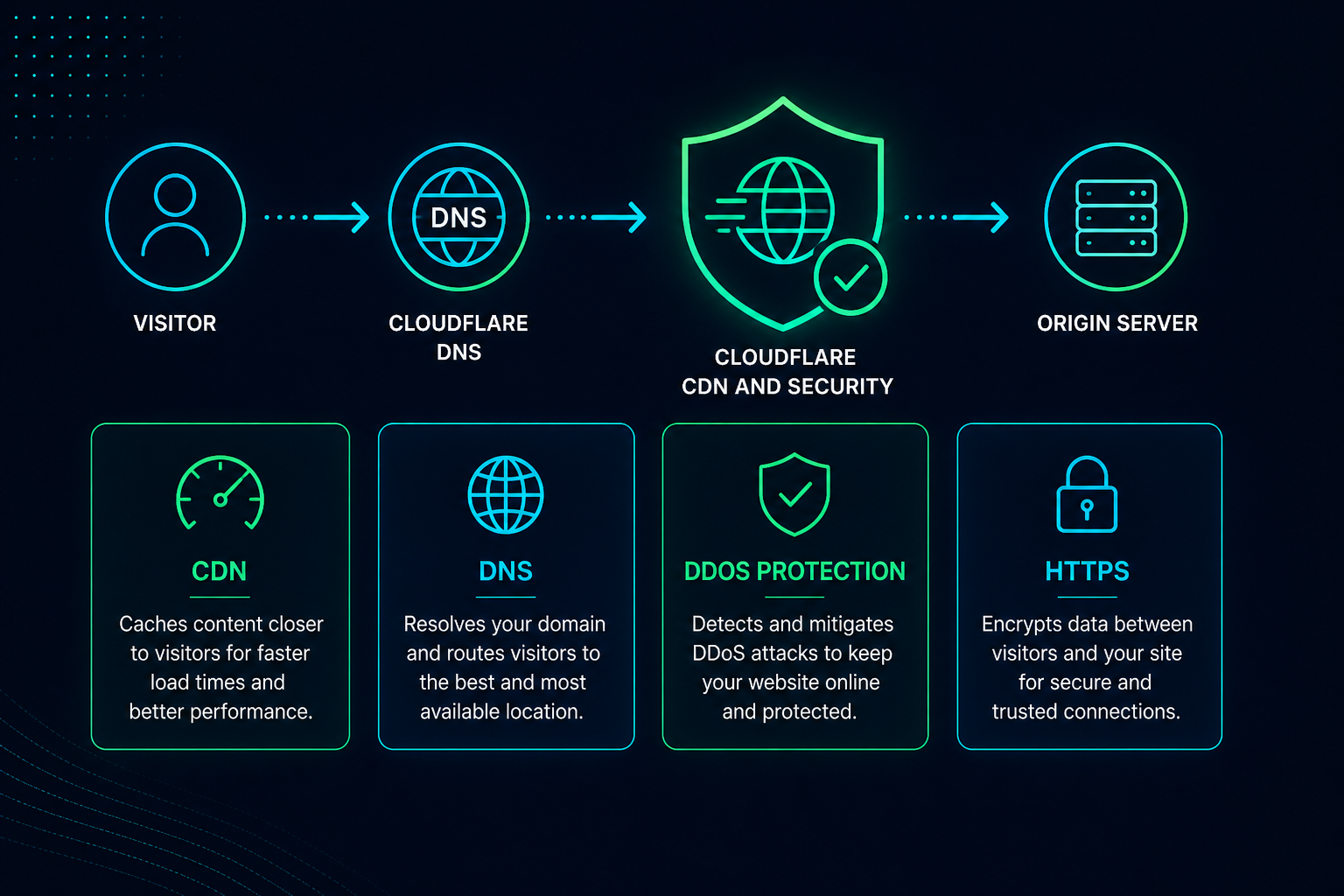
This means visitors do not always connect directly to your server first. Cloudflare can decide whether to serve cached assets, pass traffic to origin, or challenge suspicious requests.
1. What is CDN?
A CDN (content delivery network) helps deliver static assets like images, CSS, and JavaScript from a nearby network location instead of always from the origin server.
Benefits:
- faster site loading
- lower origin load
- better consistency across regions
2. What is DNS?
DNS translates a domain like `example.com` into the infrastructure that serves it. With Cloudflare DNS, you point your nameservers to Cloudflare and manage records such as `A` and `CNAME` there.
3. What is DDoS protection?
A DDoS attack floods a site with malicious traffic. Cloudflare sits in front of the origin and helps absorb, filter, rate-limit, or block suspicious requests before they overwhelm the server.
4. What is HTTPS?
HTTPS encrypts traffic between the browser and the site. Cloudflare can manage SSL/TLS certificates and help ensure websites load over `https://`.
Why it matters:
- avoids "Not secure" browser warnings
- protects forms, logins, and sensitive traffic
- supports basic SEO trust signals
Best fit use cases
- company websites
- WooCommerce / WordPress stores
- landing pages and campaign pages
- self-hosted VPS or static sites
- APIs that need a front-line protection layer
One-line summary of the four concepts
- DNS: where the site is found
- CDN: how content is delivered faster
- DDoS protection: how malicious floods are filtered
- HTTPS: how traffic is encrypted
Common misunderstandings
- Cloudflare is usually not the origin host itself
- Turning on CDN does not automatically fix a slow database or heavy application logic
- HTTPS alone does not secure the whole application — origin, forms, auth, and permissions still matter
Wondering whether your website or store should use Cloudflare? Book a free 30-minute process diagnosis